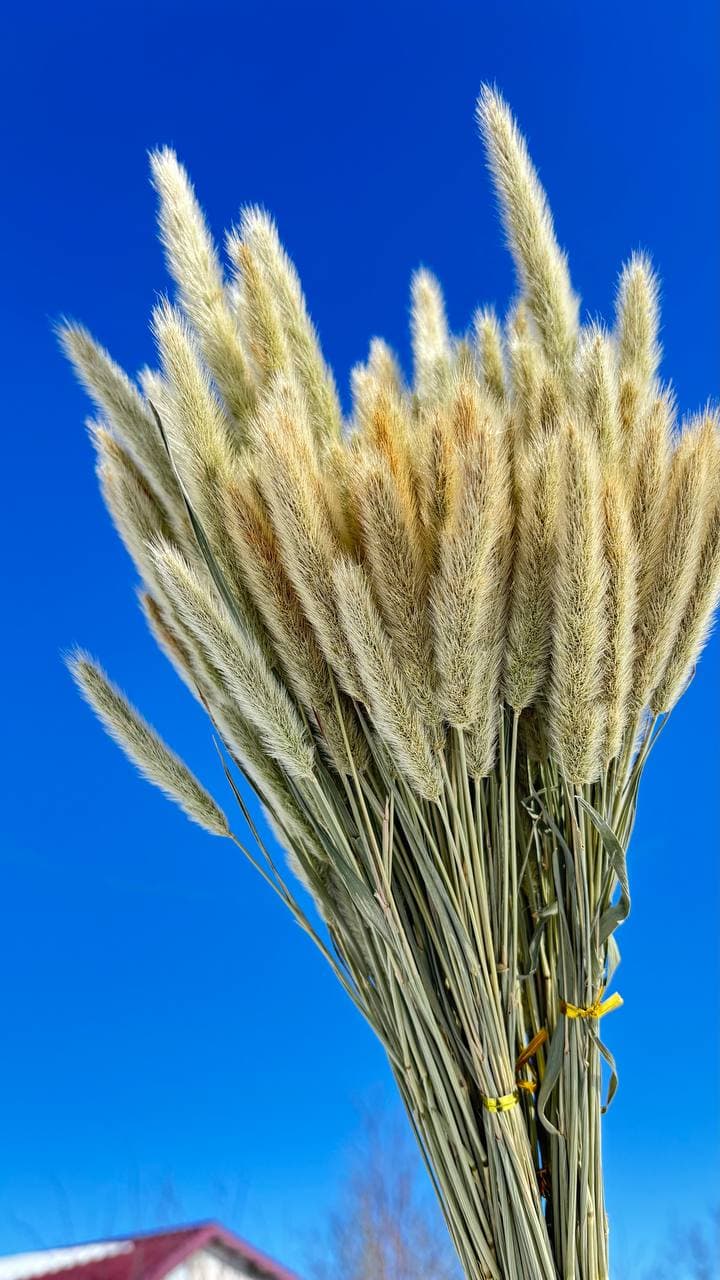
When people say "dried flowers are trending now," they imagine it started a few years ago with Pinterest. In reality it's at least the third "return" of dried flowers to popular culture in the last century.
1900–1930: Victorian legacy
Dried flowers were part of everyday decor. Every noble home had a herbarium — a pressed flower album. It was the hobby of "educated women." Tropical dried flowers meant the family traveled.
1940–1950: War decline
War buried the aesthetic. Dried flowers became "grandma" decor.
1960–1970: First return with hippies
The hippie movement revalued everything "natural." Dried grasses, branches, macrame — elements of alternative style.
1980–1990: Soviet era of dyed reed
In USSR dried flowers had their own fate — acid-colored reed ikebanas, straw matryoshkas, wheat in ceramic pots. This association still poisons dried flowers' reputation for older generations.
1990–2000: Full tilt to fresh flowers
Globalization made fresh flowers cheap (imports from Kenya, Ecuador). Dried became unnecessary.
2015–2020: Boho explosion
Three streams merged: wellness + slow living + eco-consciousness. Pampas grass became the symbol. Pinterest searches for "pampas grass" grew 500× between 2017 and 2020.
2020–2024: Mainstream stabilization
Dried flowers stopped being a trend — they became normal. IKEA, H&M Home, Zara Home have dedicated sections.
Current moment
Main tendency: quality local product. People understand the difference between cheap dyed imports and professionally dried local lavender.
What's next
- Smaller scale — not giant pampas, but mini bouquets
- More regional specificity
- Wellness integration
- Return of Victorian-style botanical frames with modern framing
Fashion on dried flowers isn't a Pinterest caprice — it's a cyclical process reflecting our relationship with nature and time.