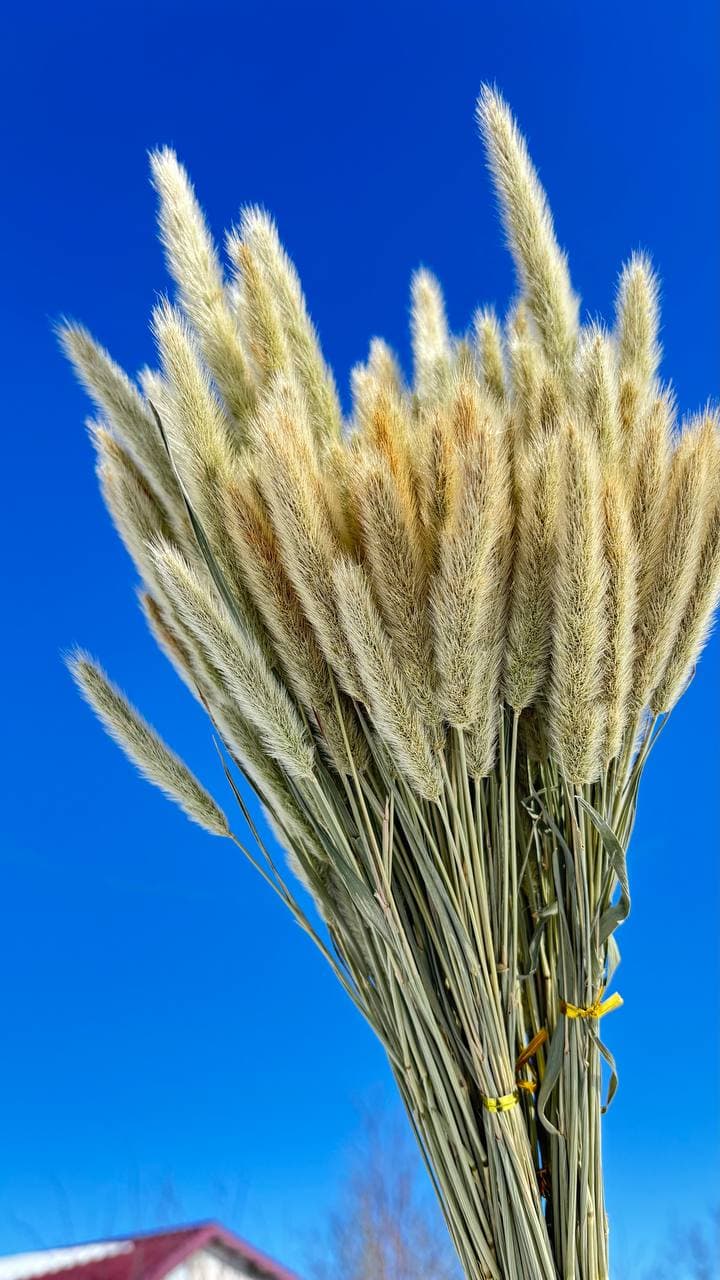
When you see a minimalist composition of one branch, a few spikes and a stone in a simple ceramic vase — and it looks more expensive than a lush bouquet — you're looking at ikebana. Even if the maker didn't think about it.
What ikebana actually is
Ikebana (生け花, "living flowers") is Japanese flower arrangement, born in the 7th century as part of Buddhist ceremonies. Over 1400 years it became a complex philosophy with dozens of schools.
Three principles that work anywhere
1. Less is more
European floristry adds. Ikebana subtracts. One bud in the right spot beats 50 flowers.
2. Space matters more than fill
The void between elements is active, not absent. Japanese call it "ma" (間) — meaningful pause. For dried flowers: one tall branch + one short + empty space = a composition.
3. Asymmetry as beauty
Rule of three — three main lines in a scalene triangle. Creates dynamics, the eye moves.
Why dried flowers suit this style
Fresh flowers are hard to arrange minimalistically — they wilt, change shape. Dried flowers are frozen in time. Exactly as you place them, so they stay a year later. You can sculpt.
Three ideal plants for ikebana-style
- Olive or cherry branch — main high line.
- Feather grass or wheat — middle vertical.
- One large flower — protea, dried rose — accent.
Vase = half the composition
Matte ceramic, simple shape. Black, grey, sage, cream. Cylinder, sphere, plain bottle.
Try it at home
One large branch from our catalog. Plain cylinder vase. Nothing else. Look for 10 minutes. If you want more — add one feather grass stem on the side, not center. Done. You have ikebana.
See also: One branch vs bouquet.


